

Walking, Wondering, and Wandering Among Piedmont’s Heritage Trees
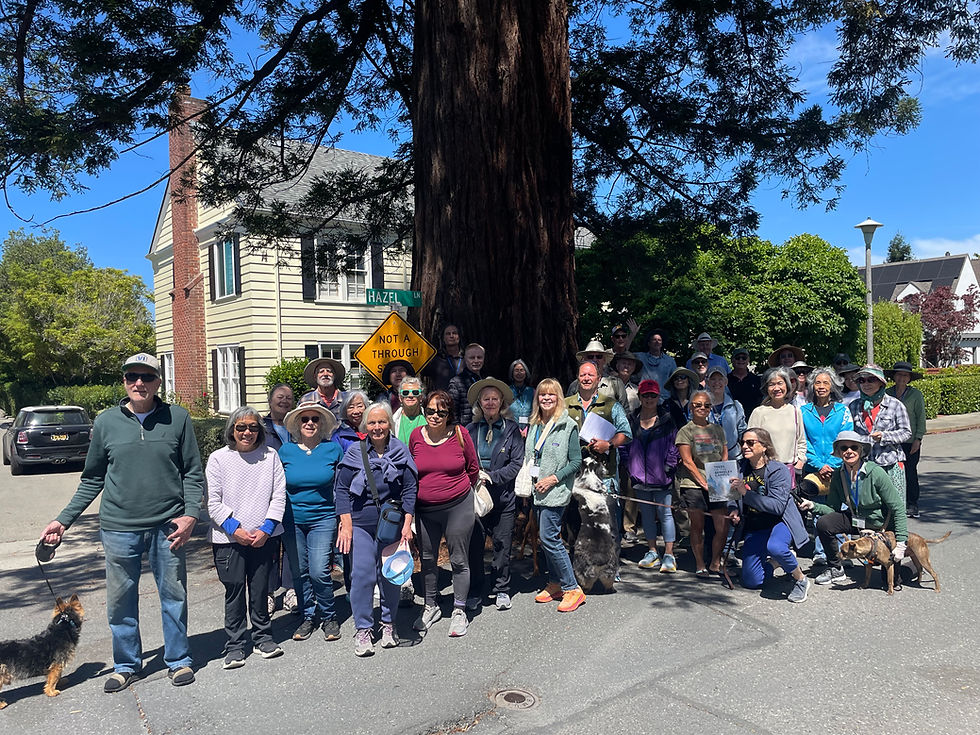
Our Piedmont Recreation Department’s Walking on Wednesdays group has gone to see Piedmont’s Heritage Trees a number of times over the years, but last Wednesday’s Heritage Tree walk was special and there was an excellent turnout at the Exedra with 41 walkers and three K-9 best friends on hand for it.
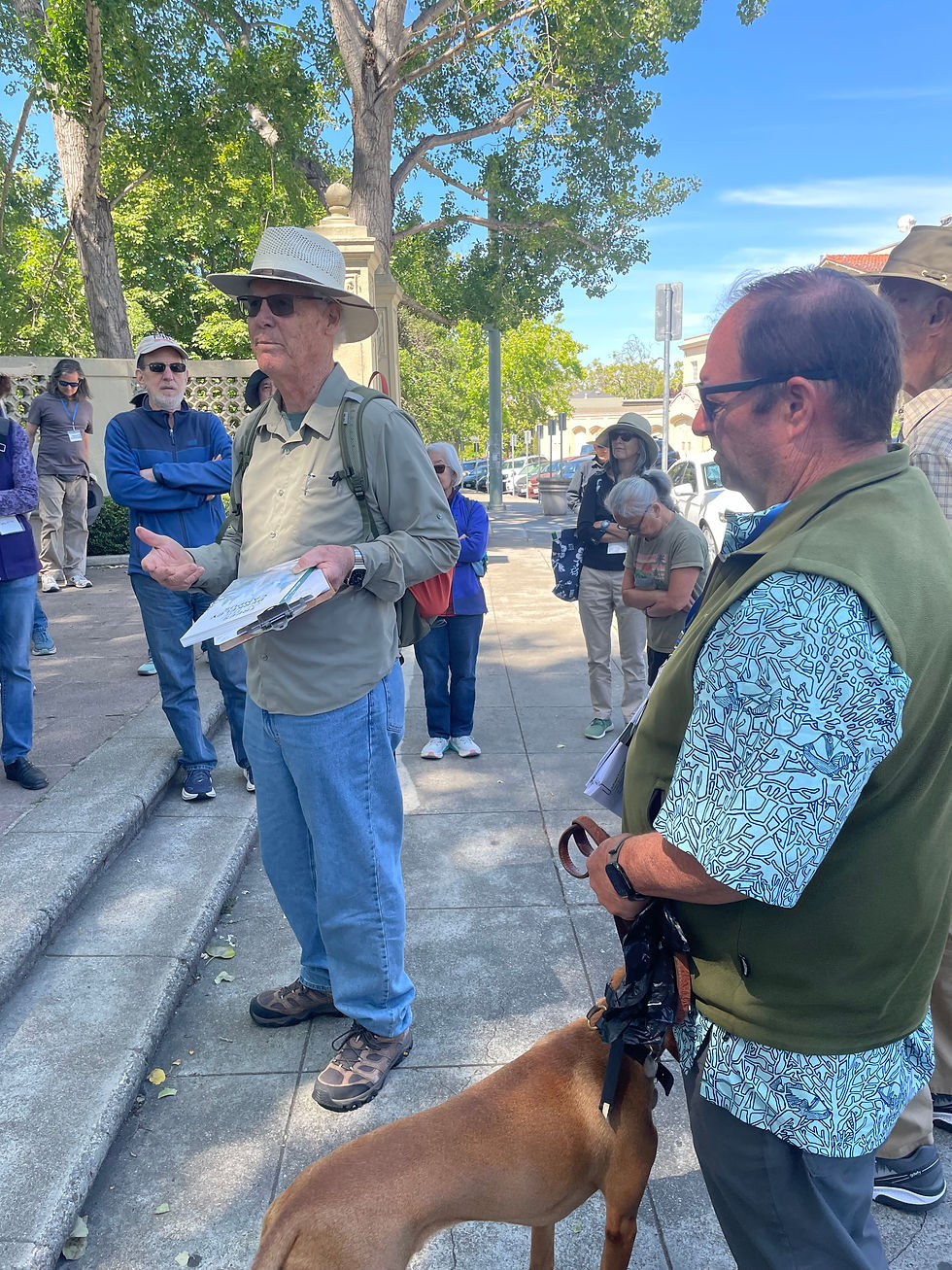
We were going to have a fascinating and educational tour of some of the city’s notable Heritage Trees led by walker and Piedmont Park Commissioner Jack F and guest leader Dave J, who is also on the Park Commission. Dave served as the University of California, Berkeley’s campus landscape architect for many years, overseeing the physical development, preservation, and sustainable evolution of the university's grounds.
The Piedmont Heritage Tree Program was created in 2018 by the City Council based on a recommendation from the Park Commission. Over 30 trees have been designated as Piedmont’s "Heritage Trees." The intent of the program is to: recognize noteworthy, distinctive trees in Piedmont city parks or open spaces, encourage residents to visit city parks and open spaces, and promote the study of nature.
After Jack’s introduction, Dave referenced his Cal predecessor, Jim Horner, and Jim’s book Trees of the Berkeley Campus, which Dave said has information on all the trees we would see in Piedmont. Later in the morning we were pleased to have Jim join us. David also shared that there are 8,000 street trees in Piedmont and the City promotes their presence. It will provide trees from the City’s corporation yard to residents for the public spaces in front of their homes at no cost.
Seeing our first Heritage Trees was easy. The grove of ten trees that surrounds the Exedra Plaza are Heritage Trees. They are a hybrid of two North American plain poplars that are native to the northern hemisphere. Their Latin name is Populus nigra italica and they are commonly known as “Highland Poplars.” These are relatively short lived trees and Dave said that at some point in the future they will have to be replaced.
We walked behind the Exedra into the upper Piedmont Park to admire a well-known Coast Live Oak. This native tree is one of the most common species in Piedmont. This one is a Piedmont icon that has been used by families for photos for decades. Dave said this tree is leaning and twisting to get more sunlight and one big branch is actually holding up the entire tree.
We continued to the Piedmont Community Hall and noted the Yulan magnolia in its front circle. This species is native to central and eastern China, is deciduous, and produces stunning white flowers in the spring. Just above it in the Community Hall parking lot is the Coast Redwood Heritage Tree that serves as Piedmont’s Holiday Tree. Dave said that the color at the tops of these trees indicates how healthy they are.
We went past the Tea House and up the lovely Highland Guilford Steps that create a grand entrance to the park’s Cherry Walk. Around the steps are other Heritage Trees. There are Japanese maples and a grove of Prunus Akebono flowering cherry trees, or Akebono cherries. Dave and Jack talked about the beauty and seasonal importance of these and other ornamental flowering trees in the urban landscape.
We emerged from the park and went down Highland and Gilford Avenues to a set of hidden steps that took us to Hazel Lane. One of the highlights of the morning was a stop on Hazel to view one of Piedmont’s largest Sequoia sempervirens— Coast Redwood trees. Dave shared historical information about the species and its important role in California’s natural heritage. The tree also provided a natural backdrop for a group photo.
The tour returned to Highland and moved down to Wildwood Avenue where we examined the colorful Autumn Blaze Maple trees that line both sides of the street. Along the way in front of homes are car strips with traditional grass. Dave asked us to imagine three feet of water on top of one foot of grass because that is the amount of water needed to keep the grass green during the year in Piedmont. In California desert cities it takes 15 to 20 feet of water for a foot of grass.
Dave and Jack also shared that the State of California has passed a law that prohibits cities from using potable (drinking) water to irrigate decorative, "non-functional" turf starting January 1, 2027. Non-functional turf is decorative grass that serves no recreational purpose or community use. This includes street medians, grass between sidewalks and streets, and areas around commercial parking lots. The law will be phased in, starting with state and local government properties, before eventually expanding to all commercial, institutional, and HOA spaces. Single-family homes are exempt. Grass actively used for sports fields, parks, playgrounds, and community gathering spaces will remain exempt. Cemeteries and turf irrigated entirely with recycled water will be also exempt. Single-family residences are not subject to this ban. So, the large strips of grass along Highland and Sheridan Avenues and other City areas will not be watered after the first of next year. They will turn brown and the answer to the question of what to do about it is still to be determined.
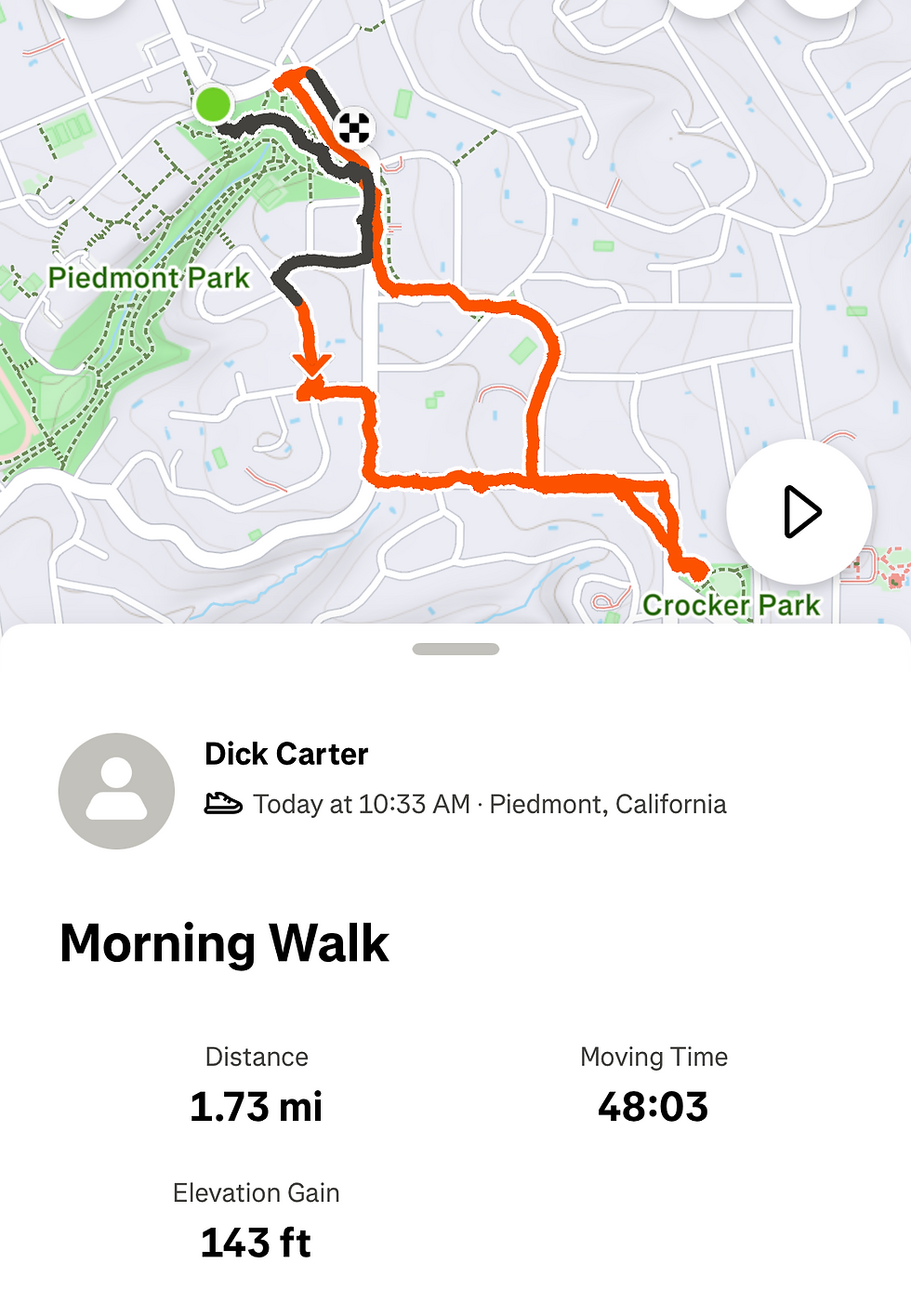
After walking through the Hall Fenway, where we observed its European White Birch Piedmont Heritage trees, our final stop was Crocker Park. We admired the majestic Copper Beech tree and an Evergreen Dogwood that was still in bloom. The walk concluded with a discussion of the Ginkgo trees along King Avenue that were named Heritage Trees in April.
Throughout the walk, Dave provided a wealth of historical and horticultural information about each species, while Jack added commentary on the ecosystems supported by the various trees. Particularly noteworthy was the contrast between California native trees and imported ornamental species.
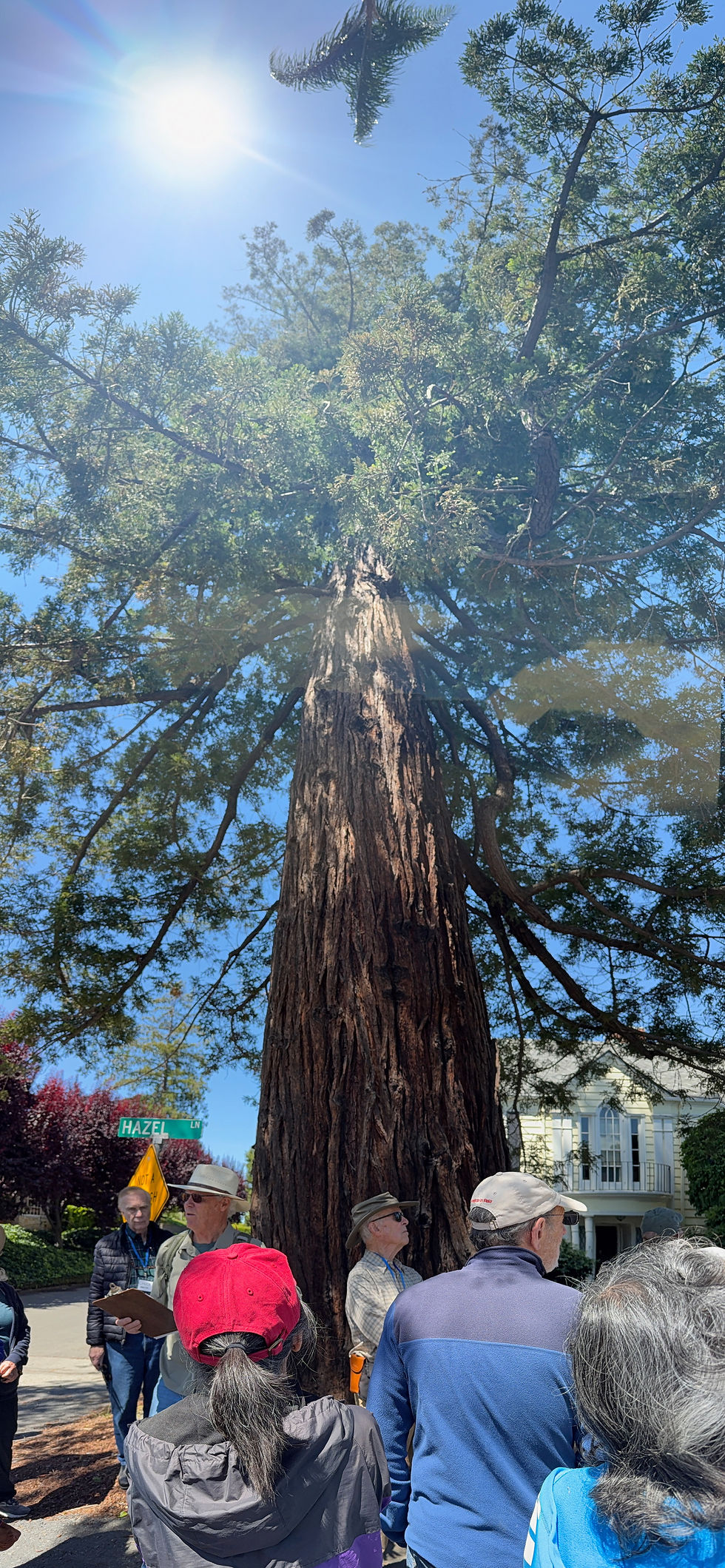
Native trees such as the Coast Live Oak and Coast Redwood support a rich biodiversity of insects, caterpillars, butterflies, pollen, nuts, and other food sources that sustain local birds and wildlife. In contrast, the Ginkgo tree, which is often referred to as a “living fossil” because it dates back millions of years, evolved outside California, and supports comparatively few local insects or caterpillars, providing limited benefit to local food webs.
The discussion also highlighted the growing emphasis by the Piedmont Park Commission on selecting more climate-adaptive and native tree species for future plantings. As California experiences hotter and drier conditions, city planners and commissioners are increasingly encouraging tree choices that are resilient, sustainable, and supportive of local ecosystems.
Our walk once again demonstrated that a simple morning stroll can become an opportunity for learning, community connection, and a deeper appreciation of Piedmont’s urban forest. we expressed our thanks to Jack F and Dave J for all the excellent information and also the hope that they will come back soon for a part two of this tour in other parts of Piedmont.
P.S. Liz D bought two copies of Jim Horner’s book and would be glad to sell the second at his discounted price of $25. The retail price is $32.50.


Comments